

News
15
2024
-
08
Basic Knowledge of Fire Sprinkler Heads
Author:
Fire Sprinkler Head:
Fire sprinkler heads are used in fire sprinkler systems. When a fire occurs, water is sprayed out through the sprinkler head's spray plate to extinguish the fire. They are categorized into various types, including pendant sprinklers, upright sprinklers, standard sprinklers, and sidewall sprinklers.
The production standards for fire sprinkler heads mainly include the following:
GB 5135.1-2019 "Automatic Sprinkler Systems Part 1: Sprinkler Heads"
GB 5135.9-2018 "Automatic Sprinkler Systems Part 9: Early Suppression Fast Response (ESFR) Sprinklers"
GB 5135.12-2006 "Automatic Sprinkler Systems Part 12: Extended Coverage Sprinklers"
GB 5135.13-2006 "Automatic Sprinkler Systems Part 13: Water Curtain Sprinklers"
GB 5135.15-2008 "Automatic Sprinkler Systems Part 15: Residential Sprinklers"
A sprinkler head is a device that activates under heat within a predetermined temperature range or is activated by control equipment based on fire signals, spraying water according to a designed pattern and flow rate.
During a fire, fire water is evenly sprayed out through the sprinkler head, controlling the fire in a specific area.
Common types of sprinkler heads include the following:
- Pendant Sprinkler: The sprinkler is installed downward, and the water falls in a parabolic shape. It is suitable for places without ceilings, such as workshops and warehouses.
- Upright Sprinkler: The sprinkler is installed upward, and the water is sprayed upward. It is generally used in places with ceilings, where the spray plate is located above the sprinkler.
- Sidewall Sprinkler: Installed against a wall, suitable for narrow spaces where wall protection is needed, such as offices and guest rooms.
- Concealed Sprinkler: Installed within the ceiling, the sprinkler is hidden by a decorative cover and only activates when the cover falls off during a fire. It is commonly used in aesthetically demanding places, such as shopping malls and hotels.
- Early Suppression Fast Response (ESFR) Sprinkler: Mainly used to protect high-piled and high-shelf warehouses, capable of quickly responding to fires and spraying water to extinguish them.
- Water Curtain Sprinkler: The water forms a curtain, used for fire separation or cooling protection.
Different types of sprinkler heads vary in spraying methods, protection areas, and applicable locations, and should be selected based on specific fire protection needs.
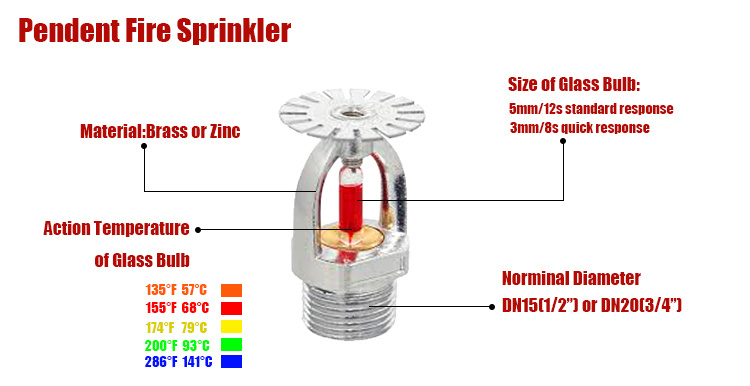
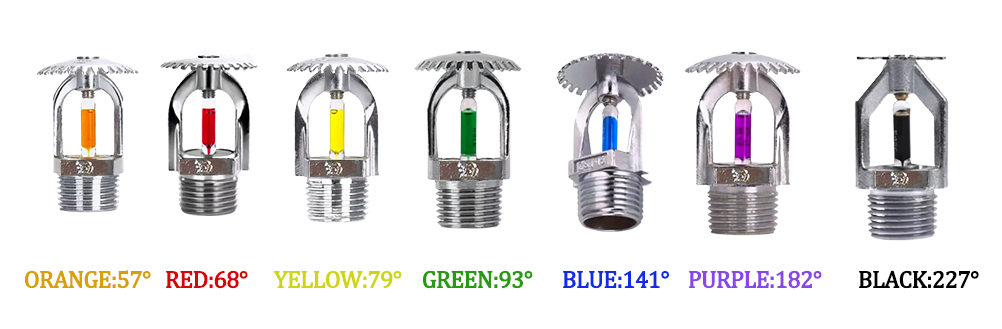
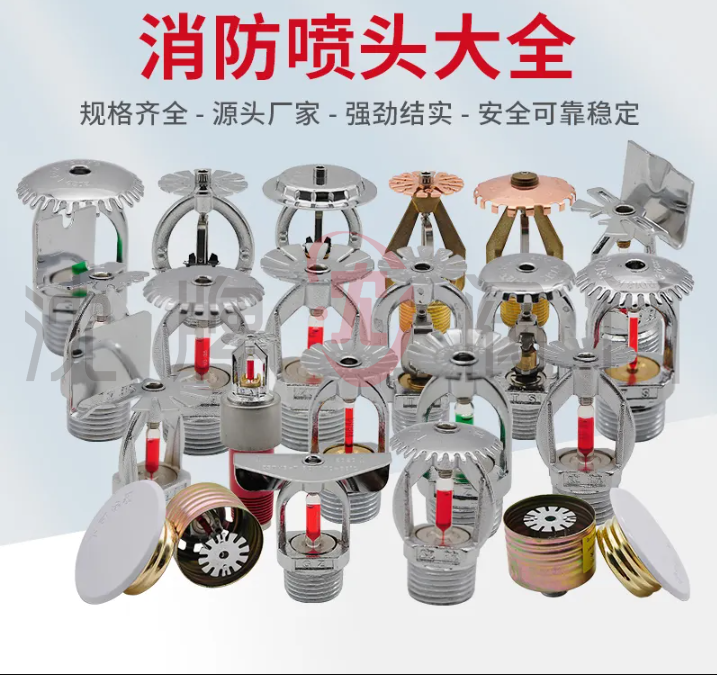
1. Pendant Sprinkler
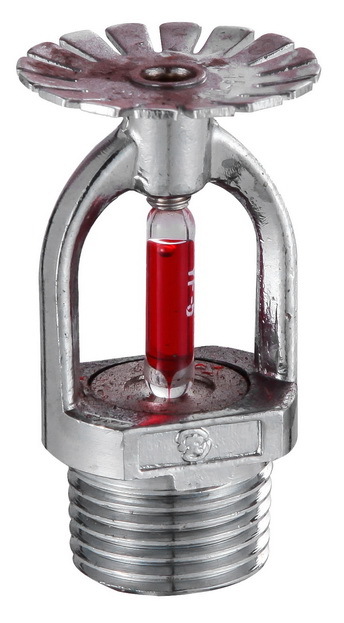
Characteristics::
- The spray plate of the sprinkler faces downward, and the water falls in a parabolic shape.
- This installation method is quite common and relatively simple to construct.
Applicable Scenarios:
Commonly used in places without ceilings, such as factory workshops and large warehouses, which are spacious and have high fire protection requirements.
Example:Certain models of pendant sprinklers can quickly respond during a fire, spraying a large amount of water to effectively cover the space below and control the spread of the fire.
2. Upright Sprinkler
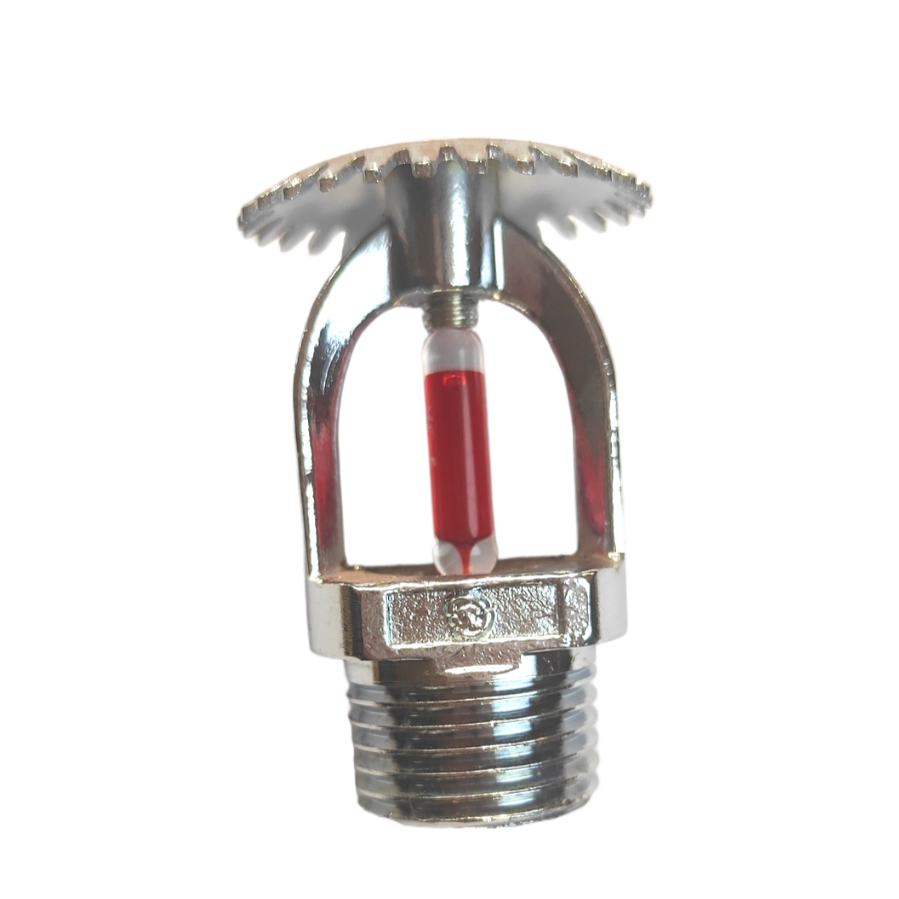
Characteristics::
- The spray plate of the sprinkler faces upward, and the water is sprayed upward before falling freely.
- Usually installed in places with ceilings, where the spray plate is located above the sprinkler.
Applicable Scenarios:
Suitable for places with ceilings that have specific requirements for the direction of water spray, such as shopping malls and office buildings.
Example:: In indoor spaces with ceilings, upright sprinklers can penetrate the ceiling during a fire, quickly spraying water to extinguish the fire while minimizing damage to the ceiling.
3. Sidewall Sprinkler
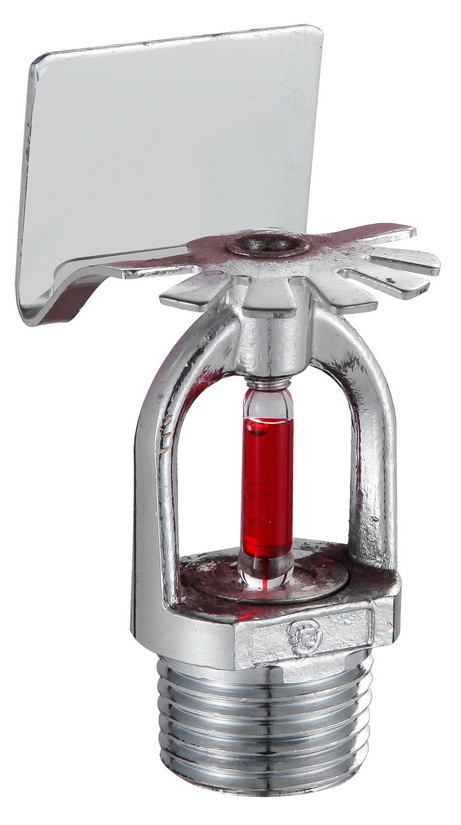
Characteristics::
- Installed against a wall, the sprinkler's spray shape is semi-parabolic.
- It has specific installation location requirements and can generally only be installed close to walls.
Applicable Scenarios:
Mainly used in narrow spaces where wall protection is needed, such as offices, guest rooms, and corridors.
Example:: In hotel guest rooms, sidewall sprinklers can be installed along the wall, effectively protecting one side of the room during a fire.
4. Concealed Sprinkler
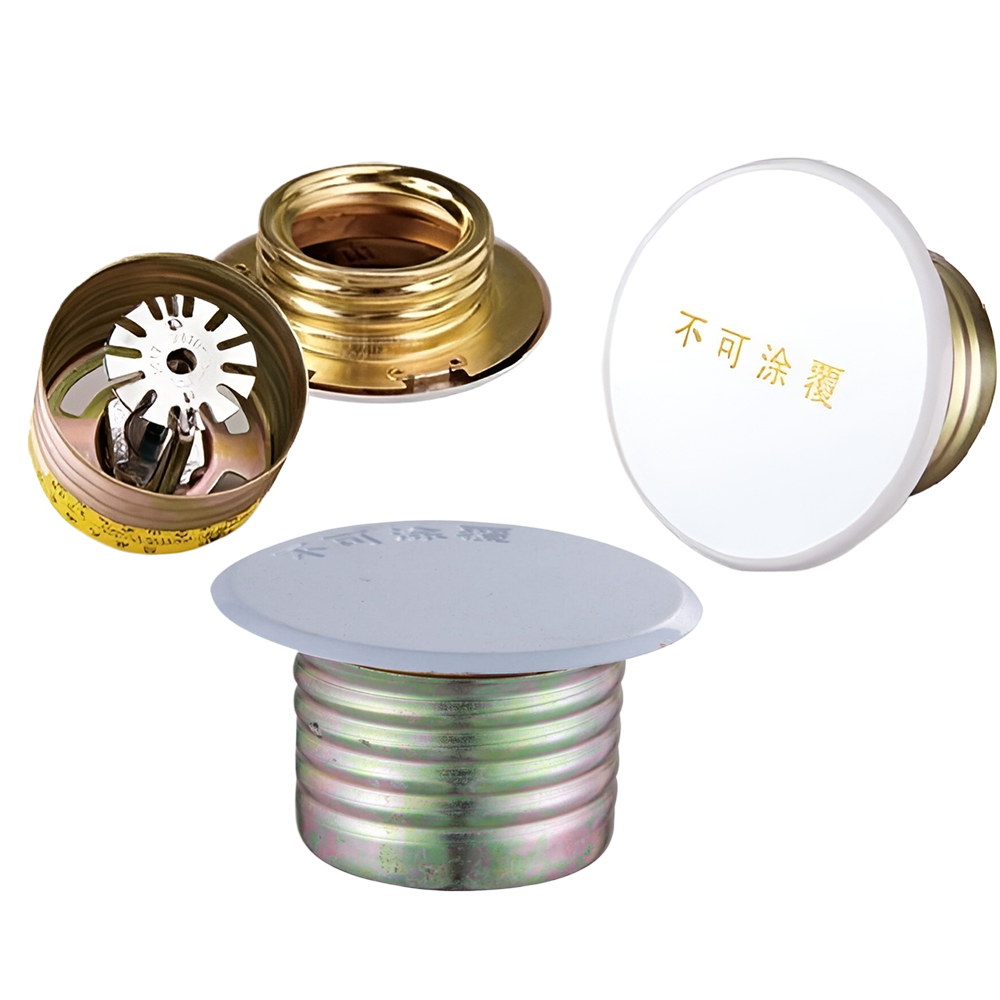
Characteristics::
- The sprinkler is installed within the ceiling, and is usually hidden by a decorative cover, not affecting the aesthetics of the room.
- When a fire occurs, the decorative cover falls off due to the rising temperature, and the sprinkler begins to spray water.
Applicable Scenarios:
Commonly used in places with high aesthetic requirements, such as high-end hotels and finely decorated areas of shopping malls.
Example:: In the ceiling of a luxury shopping mall, the concealed sprinkler blends seamlessly with the ceiling when not activated, maintaining overall aesthetics, and can promptly function to extinguish fires when needed.
5. Early Suppression Fast Response (ESFR) Sprinkler
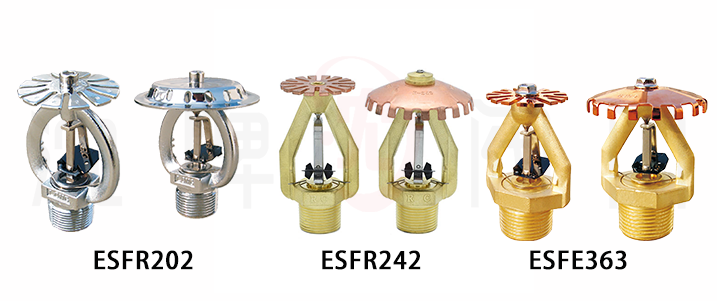
Characteristics::
- Fast response speed, capable of quickly spraying water to extinguish fires in their early stages.
- Large water output, effectively extinguishing early high-intensity fires.
Applicable Scenarios:
Mainly used to protect high-piled and high-shelf warehouses, which are at higher fire risk.
Example:: In large logistics warehouses, ESFR sprinklers can quickly respond and spray a large amount of water, effectively controlling and extinguishing potential severe fires.
6. Water curtain nozzle
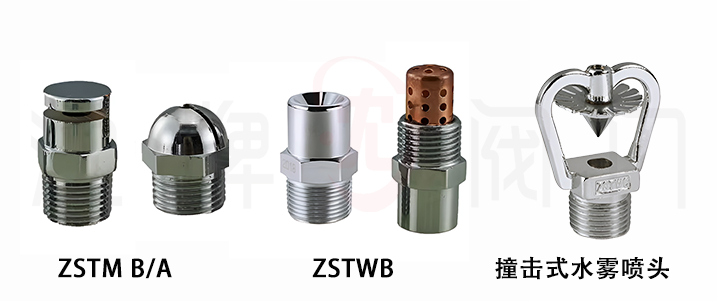
Characteristics::
- The sprayed water forms a curtain of water, which does not directly extinguish the fire but serves to provide fire separation or cooling protection.
- Typically installed in groups to form a continuous water curtain.
Applicable Scenarios:
Used in areas that require fire separation, such as fire curtains, stage openings, etc.
Example:Install water curtain nozzles at the stage opening, which can form a water curtain during a fire to prevent the fire from spreading to the stage while also providing cooling protection to the surrounding area.
Related News
2022-05-23
2022-05-23
Address: 261 High-tech Park South Road, Lun Cang Town, Nanan City, Quanzhou City, Fujian Province
Telephone:0595-29880666
Fax:0595-86181291
Website:www.fjspfm.com
E-mail: fjspfm@163.com
COPYRIGHT©2022 Fujian Shenpai Valve Manufacturing Co., Ltd ALL RIGHTS RESERVED.